The problem:
USC’s University Relations department needed a website revamp. The university as a whole was moving their site to Drupal and consolidating content-types to be used across departments, but University Relations also needed to reorganize their department pages and rewrite content for each of them.
The original landing page
Below, you’ll see the original University Relations department landing page. It’s a good example of what needed to be changed on each of the department pages.
There is no content hierarchy on the page — it’s hard to know which of these community partnerships is the most current or the largest, or the most important.
There are no links on the page, so there’s no way to find out more about each partnership.
The only image is too small, and there is no caption or alt text, so it’s hard to know what we’re looking at and how it relates to the overall content.
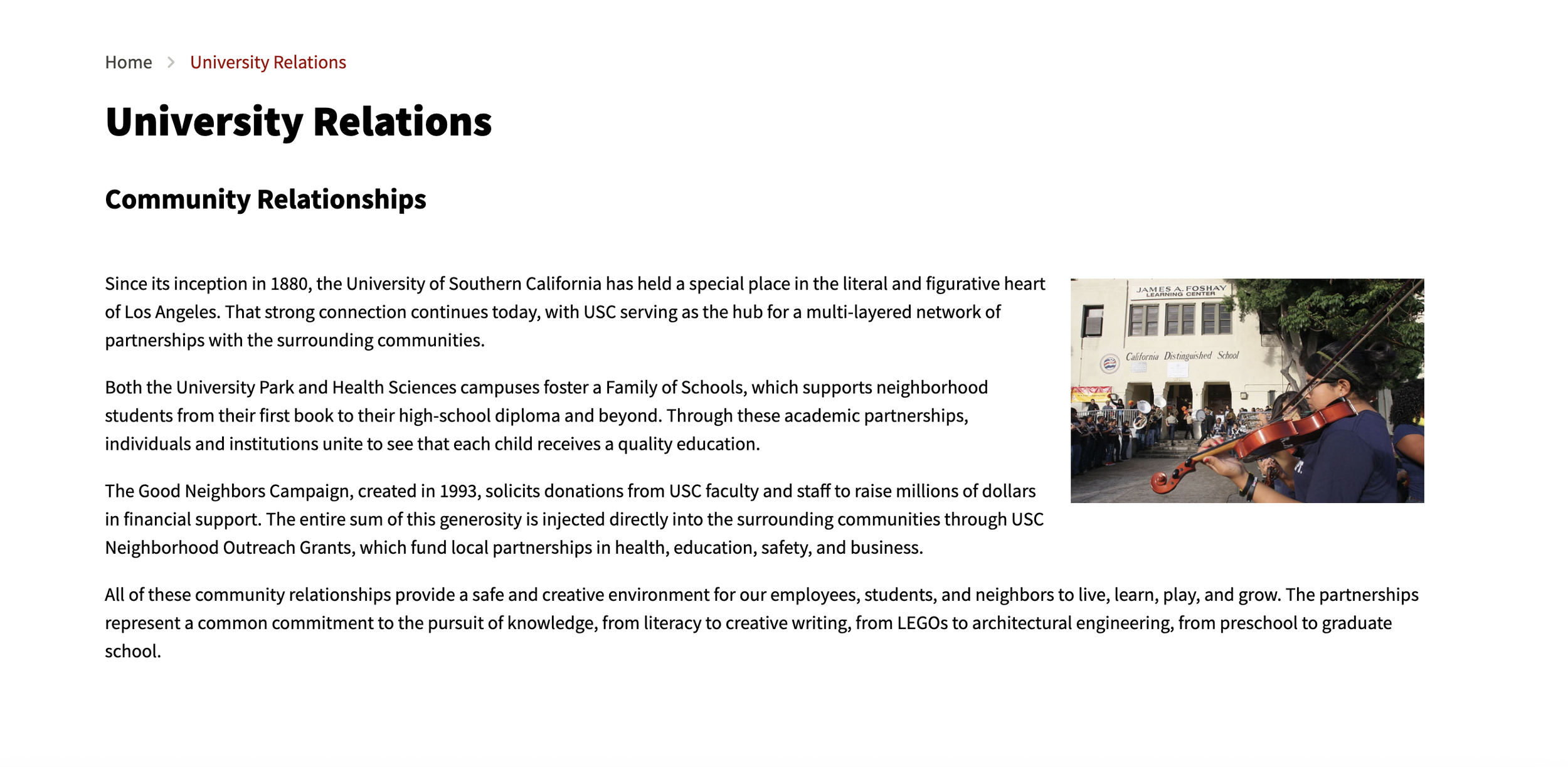
This was the existing University Relations department landing page. Note there are no links to the programs within the department, and there is no content hierarchy on the page.
The solution:
First, I conducted an audit of the University Relations site, identifying elements including:
the name of the piece of content
the URL
whether metadata was present (for many of these pages, it wasn’t)
user needs for the piece of content
accessibility
readability score (I used the WebFX readability checker)
content best practices (including clear headings, chunking of content, and clarity of the key message)
the goal for the piece of content (keep, modify, or retire)
next steps and notes on the content
All in all, the department site consisted of about 100 pages. About two-thirds of these pages needed substantial content work.
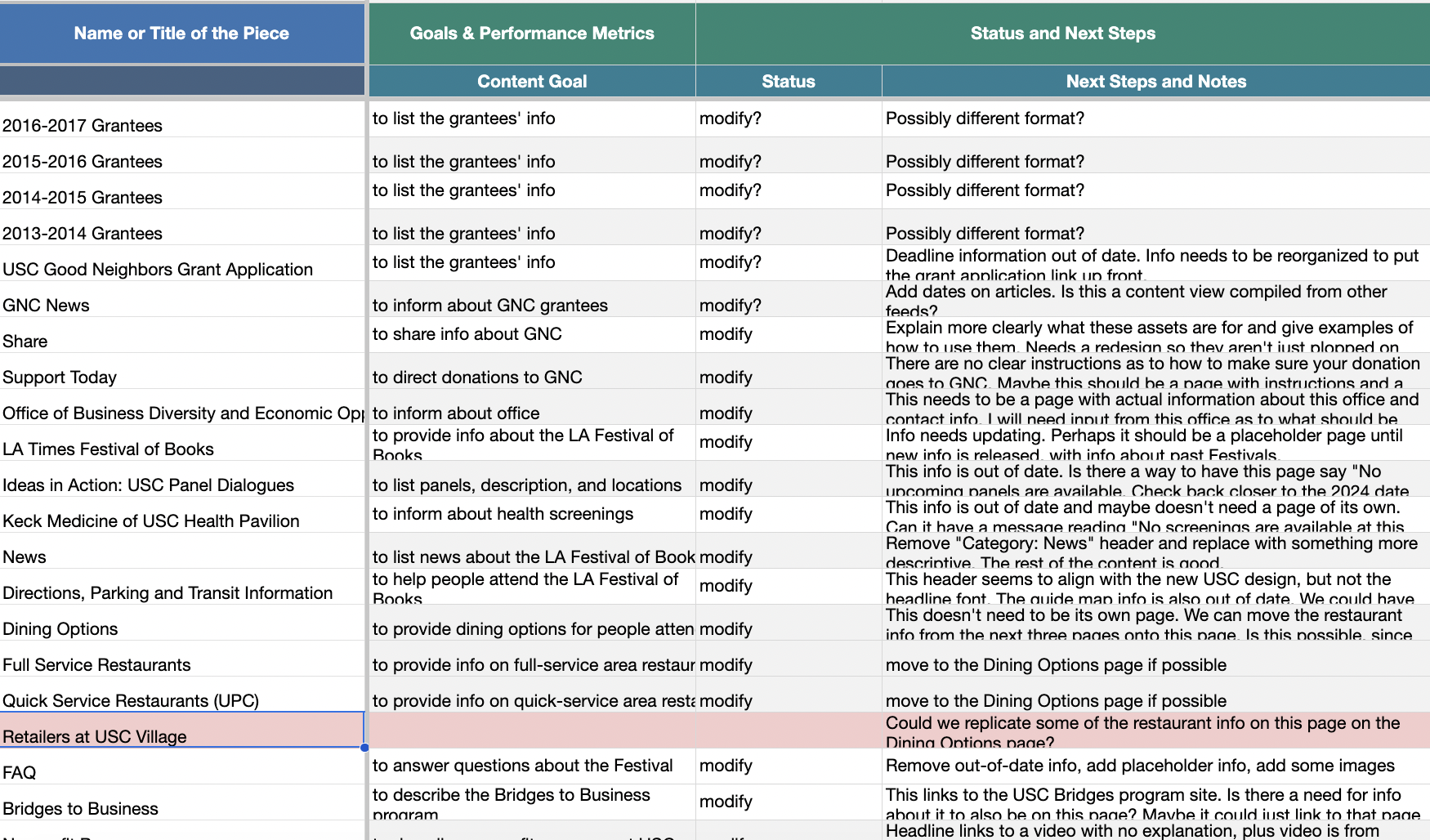
Part of my content audit, detailing content goals and next steps.
The proposal
I put together a proposal that suggested three tiers of work, giving the department some flexiblity for what they wanted to do now versus in the future.
Tier 1 included:
Align website content with new USC branding and tone
Create narrative voice for website content
Identify and categorize content based on how it will be used on the new site
Address feedback
Tier 2 added:
Copy-edit and integrate new content
Perform QA on updated site
Tier 3 added:
Conduct SEO research and implement SEO best practices
The department chose Tier 1 for now.
Site organization and categorization
My first task was to organize the pages into a more cohesive structure. I worked with University Relations’ communications team to identify the page hierarchy and organize the content into categories based on that hierarchy.
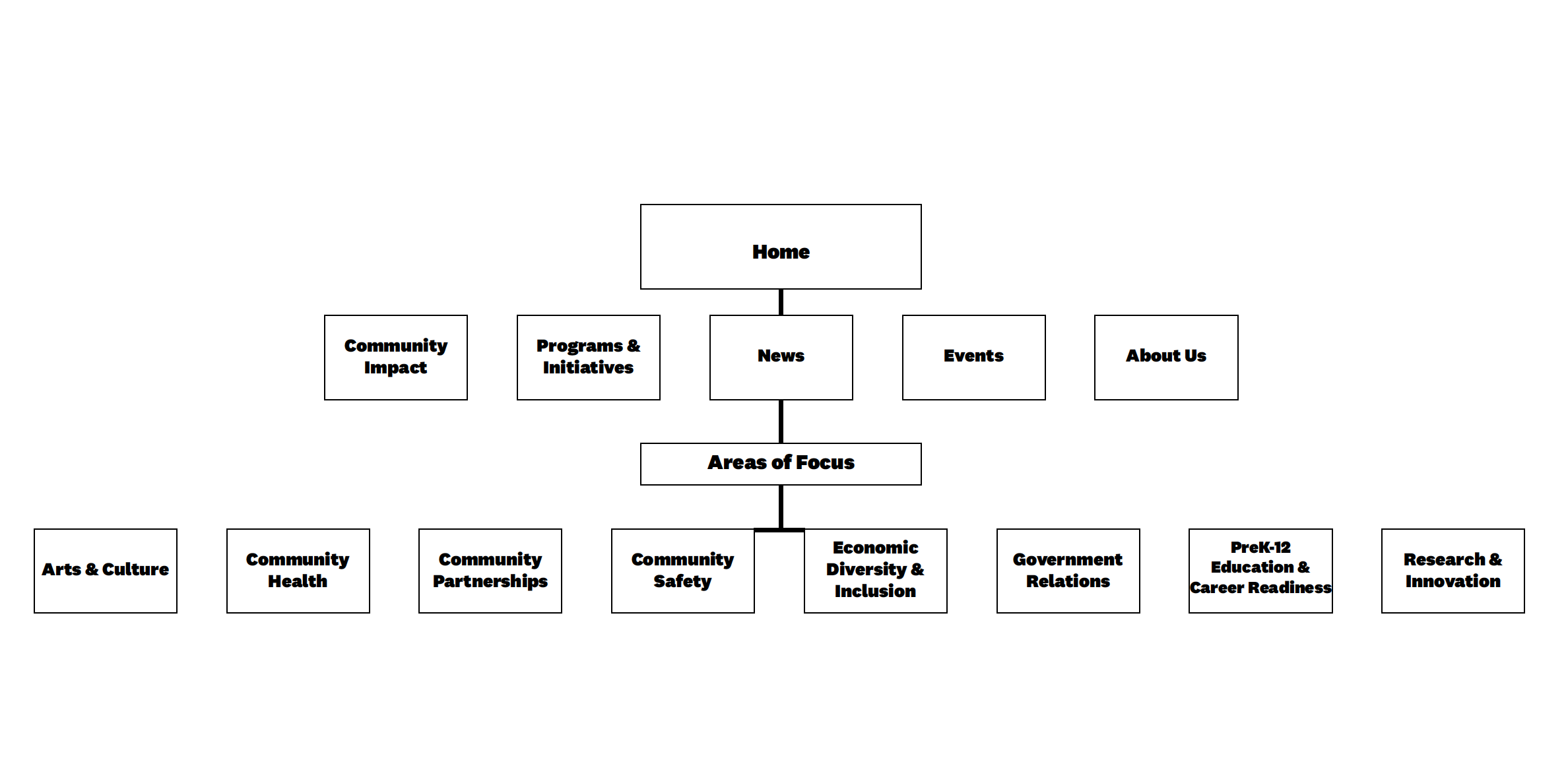
This is the new site map we came up with.
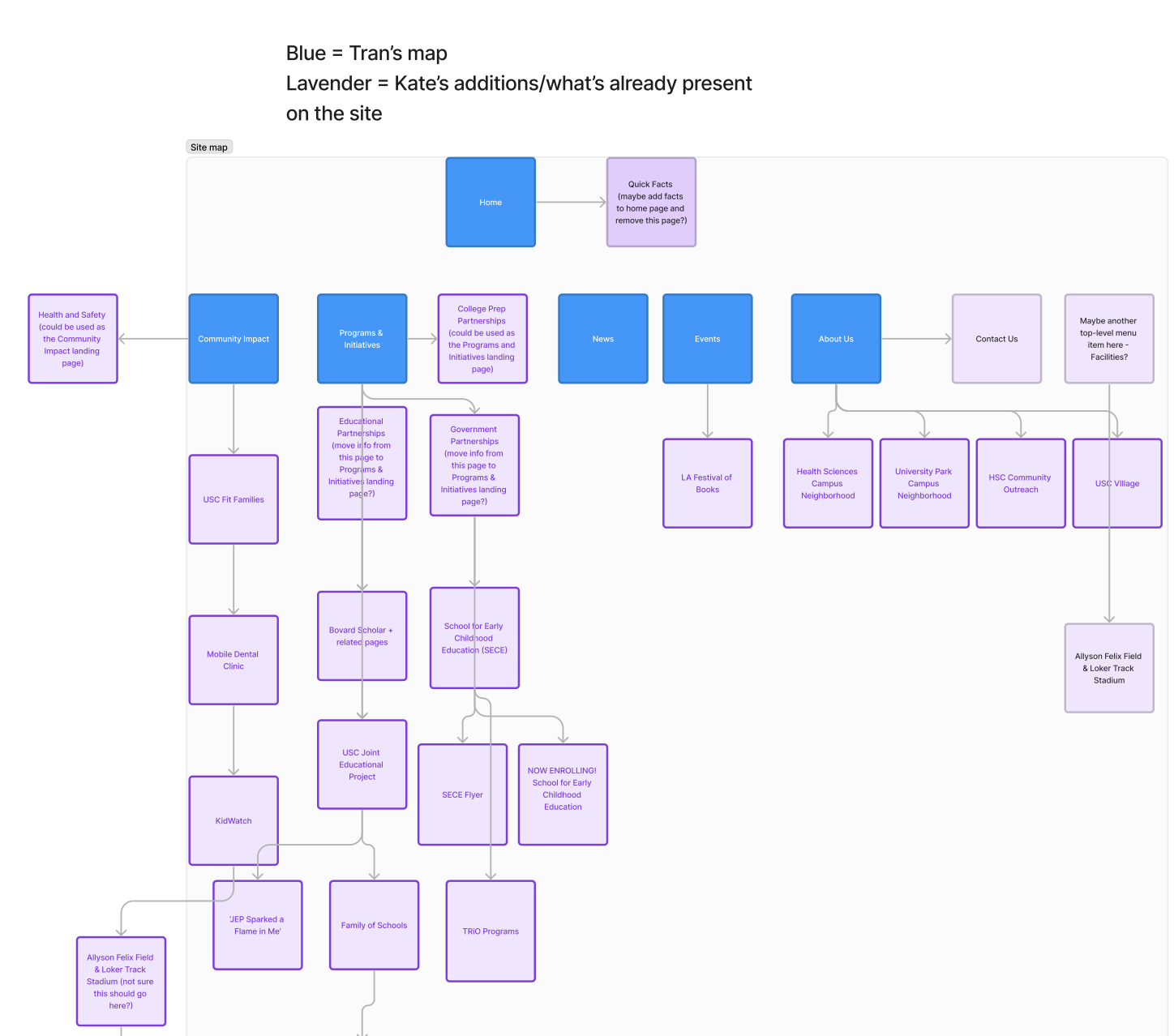
I then organized the remaining pages into the categories we had come up with.
New navigation
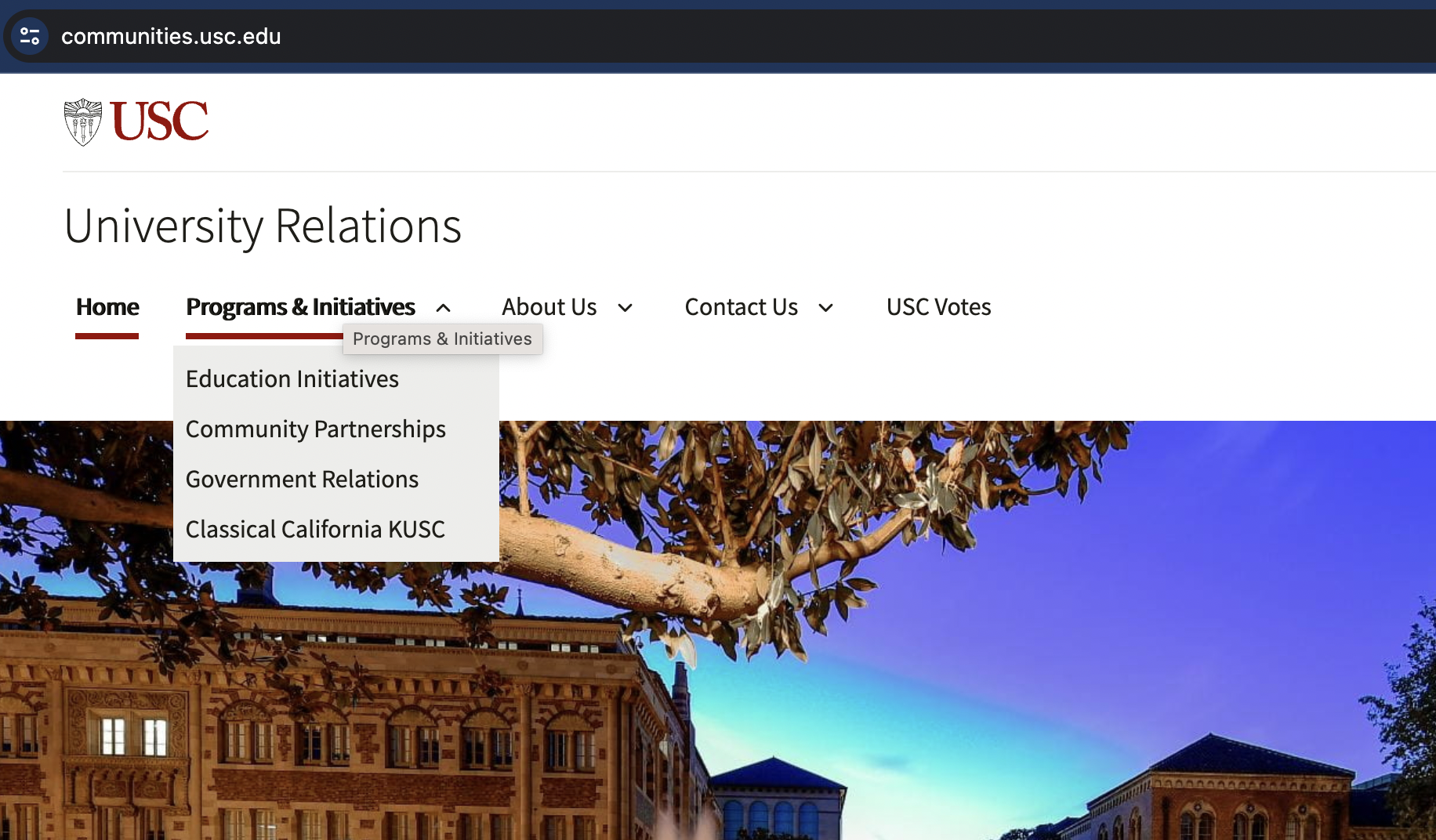
Based on this new structure, we came up with new nav for each section of the site.
New design
Above, you can see that the USC website redesign allowed not only for new nav, but also a new hero image. The department then shared more of the new design with me, which allowed me to begin writing for each content type on each page.
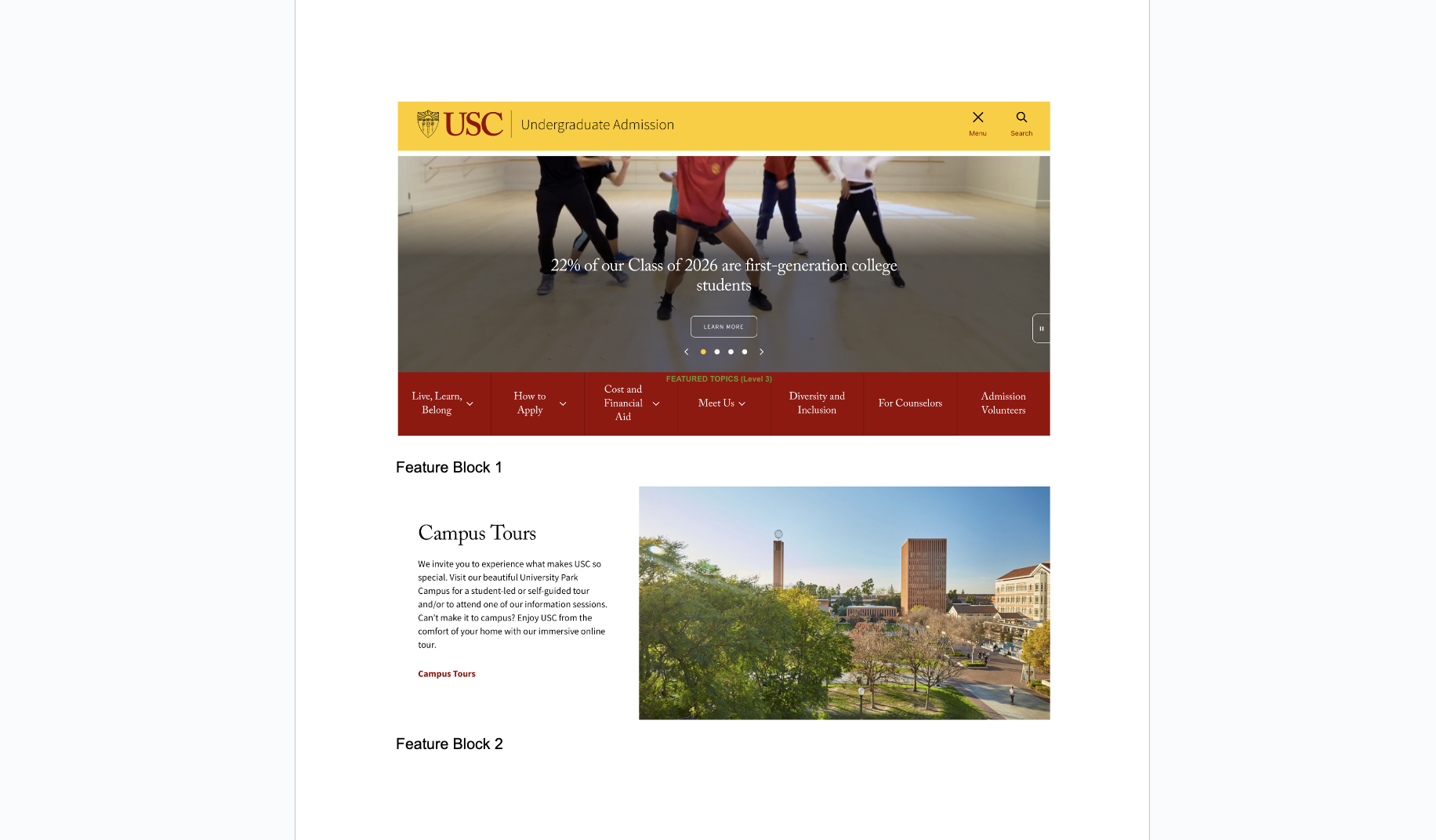
Part of the new website design with content types in Drupal.
New content
I then began writing the new content for each page, making sure it fit the new components/content types that the designers and engineers had created for the overall site redesign.
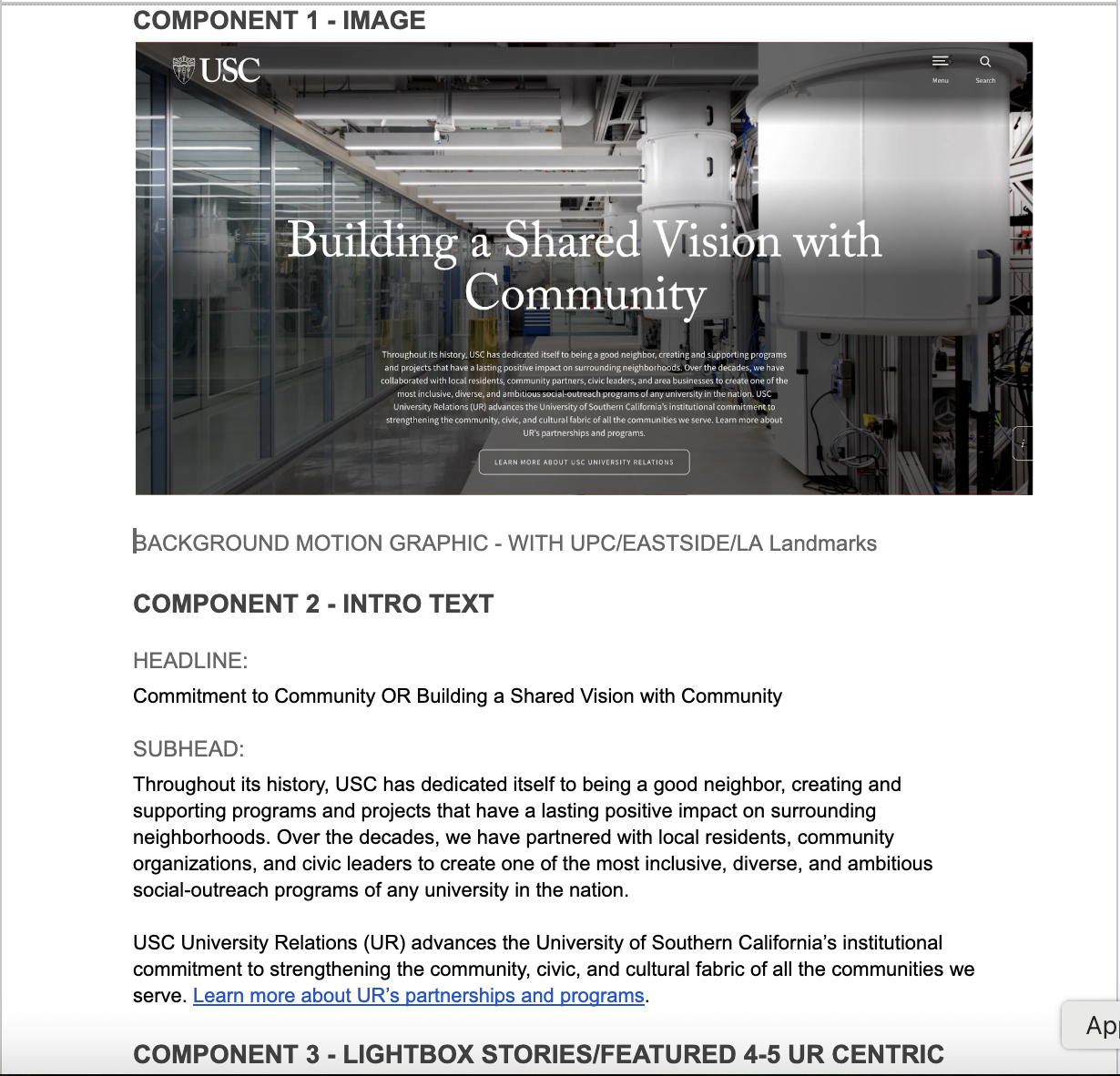
This is the copy deck for the new University Relations landing page.
The site goes live
Finally, we launched the revamped University Relations landing page.

The University Relations landing page.
Changes that happened before launch
We renamed the Community Partnerships section to Who We Are, and surfaced those categories on the landing page as feature blocks.
We took a section named USC At a Glance from a presentation that University Relations had created and turned it into a By the Numbers section, using the Image Gallery component. We then moved it above the news stories section.
The footer originally contained more links, including some to different university departments. This was shortened, and it now only contains links to content that is relevant to University Relations.